Listeners:
Top listeners:
-
 play_arrow
Tropik Riddim Radio Reggae At It's Best 24/7
-
 play_arrow
Seductively Silky Radio The Best In Slow Jams 24/7
-
 play_arrow
Seductive Vibes Radio For All The Lovers. And The Lovers Of Music
music_note

The Supremes: The Jean Terrell Era (1970–1973)
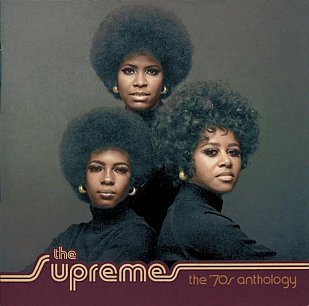
The Unsung Years That Redefined the Sound of a Legend
When Diana Ross stepped away from The Supremes in 1970, most of the music world assumed it was the end of an era — that Motown’s most successful female group would fade into memory. But for the women who carried the torch forward, it wasn’t the end at all. It was a new beginning.
The years between 1970 and 1973 — known today as The Jean Terrell Era — represent one of the most musically rich and artistically graceful chapters in The Supremes’ story.
This was the sound of rebirth: elegant, soulful, and quietly defiant.
🎤 A New Voice, A New Vision
When Jean Terrell joined Mary Wilson and Cindy Birdsong, the task ahead was monumental — to prove that The Supremes could survive and even thrive without Diana Ross.
Jean, a Chicago-born vocalist with a jazz and gospel background, had a warm, full-bodied tone that immediately gave the group a fresh identity. She wasn’t trying to imitate Diana — she brought her own sense of soul and sophistication.
Mary Wilson’s role expanded as well, both vocally and creatively. Long the group’s emotional core, Mary now became a stabilizing force, mentoring Jean and helping shape the group’s new image. Cindy Birdsong provided consistency, her high harmonies maintaining the group’s signature polish.
The result? A new Supremes — one that blended the refined Motown formula with more organic, contemporary soul.
💿 Right On (1970): A Confident Reintroduction
Their first post-Diana album, Right On, was more than just a comeback — it was a statement.
Released in April 1970, it featured a diverse set of songs that balanced message and melody, with strong production from Frank Wilson.
Key tracks:
-
“Up the Ladder to the Roof” — Their debut single with Jean on lead. Bright, optimistic, and empowering, it reached #10 on the Billboard Hot 100 and became an instant classic.
-
“Everybody’s Got the Right to Love” — A heartfelt anthem of equality and unity, capturing the social spirit of the early ’70s.
-
“Bill, When Are You Coming Back” — A powerful storytelling track that showed Jean’s dramatic range and vocal nuance.
Right On re-established The Supremes as a serious recording act. The message was clear: the name still meant quality, class, and soul.
💞 New Ways But Love Stays (1970): Artistry in Bloom
Released later that same year, New Ways But Love Stays showed growth and depth. The Supremes were no longer chasing pop hits — they were embracing soulful maturity.
Highlights:
-
“Stoned Love” — A masterpiece. Co-written by Frank Wilson and Kenny Thomas, it fused gospel fervor with a call for peace and love. The song reached #7 on the Billboard Hot 100 and became their last Top 10 pop hit.
-
“It’s Time to Break Down” — Reflective, moody, and ahead of its time, showcasing the group’s evolving emotional palette.
-
“Together We Can Make Such Sweet Music” — A soft, romantic ballad that hinted at the adult-contemporary direction they’d soon explore.
New Ways But Love Stays is often regarded as the strongest album of the Jean Terrell years — a sophisticated blend of heart and harmony that earned critical respect and fan loyalty.
🎶 Touch (1971): Smokey’s Touch of Class
For 1971’s Touch, Motown turned to Smokey Robinson as producer. The result was a collection that shimmered with warmth and subtlety.
The title track, “Touch,” is a gentle, sensual love song with Smokey’s trademark lyrical finesse. Other standouts like “It’s So Hard for Me to Say Goodbye” (later reinterpreted by Boyz II Men) and “Nathan Jones” revealed the group’s range — from elegant heartbreak to pop accessibility.
“Nathan Jones,” in particular, became a fan favorite and a UK Top 10 hit — one of the most enduring Supremes songs from the 1970s.
🌞 Floy Joy (1972): The Sophisticated Soul Era
As detailed in our previous feature, Floy Joy carried on the Smokey Robinson collaboration. The album refined the sound of Touch — smooth, grown, and classy.
With songs like “Automatically Sunshine” and “Your Wonderful, Sweet Sweet Love,” the group leaned into easygoing, melodic soul with jazz undertones.
It was mature Motown — polished but heartfelt.
The chemistry between Jean Terrell and Mary Wilson had never sounded better, proving that The Supremes were more than capable of sustaining the Motown tradition.
🌙 The Supremes Produced and Arranged by Jimmy Webb (1972)
Their final studio album with Jean Terrell was a bold creative experiment.
Motown enlisted pop songwriter Jimmy Webb (known for “MacArthur Park” and “By the Time I Get to Phoenix”) to write and produce the entire album.
The result was unexpected — a lush, orchestral record that stretched The Supremes’ sound into new emotional territory.
Standout moments:
-
“I Guess I’ll Miss the Man” (from the musical Pippin) — reflective and theatrical.
-
“Tossin’ and Turnin’” — playful and uptempo.
-
“I Keep It Hid” — an overlooked gem, featuring one of Jean Terrell’s most nuanced performances.
Though the album didn’t perform strongly commercially, it’s now considered a cult favorite among collectors — admired for its artistic ambition and cinematic arrangements.
💔 The Closing Chapter
By 1973, Jean Terrell had grown weary of Motown’s internal politics and lack of creative freedom. She departed quietly, followed soon after by Lynda Laurence, who had replaced Cindy Birdsong for a brief time.
Mary Wilson — ever the anchor — carried on with new lineups, but the Terrell era had officially closed.
🌟 The Legacy of the Jean Terrell Years
Time has been kind to this era of The Supremes. What was once overlooked as the “post-Diana” period is now seen as a golden chapter of creative maturity.
Jean Terrell’s rich vocals, Mary Wilson’s elegant grounding, and Smokey Robinson’s or Frank Wilson’s polished production gave The Supremes something rare — continuity with evolution.
Songs like “Up the Ladder to the Roof,” “Stoned Love,” “Nathan Jones,” and “Automatically Sunshine” remain among the finest examples of early ’70s soul-pop.
This was not a group clinging to its past — it was one redefining what it meant to survive change with grace.
💬 Final Reflection
The Jean Terrell era of The Supremes was about resilience and rebirth.
It showed that the Motown legacy wasn’t tied to one voice, but to a shared spirit — of unity, harmony, and hope.
🎵 “Stoned love — love, peace, and happiness.”
That lyric said it all. Through every shift and every song, The Supremes stood for that ideal — and they never lost it.


Post comments (0)