Listeners:
Top listeners:
-
 play_arrow
All Vibin’ Disco Where the Groove Never Stops
-
 play_arrow
Tropik Riddim Radio Reggae At It's Best 24/7
-
 play_arrow
Seductively Silky Radio The Best In Slow Jams 24/7
-
 play_arrow
Seductive Vibes Radio For All The Lovers. And The Lovers Of Music
music_note

How Grammys Boss Harvey Mason Jr. Is Navigating Ai-Powered Music: ‘This Is the Toughest Part of My Job’
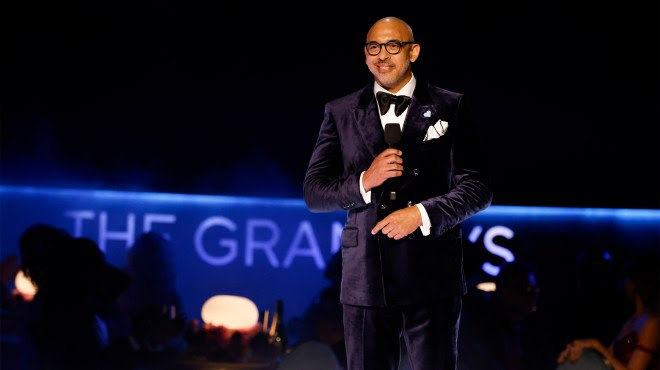
As you explore the complexities surrounding AI in music, you’ll find that Harvey Mason Jr., the CEO of the Recording Academy, is uniquely positioned to address these challenges. He’s balancing innovation with the need for artistic integrity, a task that proves to be increasingly difficult. With copyright issues and equity concerns on the rise, Mason’s approach may redefine the future of music. What strategies is he employing to ensure that human creativity remains at the forefront?
The Impact of AI on Music Creation
As you explore the evolving landscape of music creation, you’ll notice that AI is reshaping how artists compose and produce their work.
With advanced algorithms, AI tools analyze vast musical databases, generating unique melodies and harmonies that inspire creativity. This technology allows you to experiment with sounds and styles previously unimaginable, pushing boundaries and expanding your artistic palette.
AI can also streamline the production process, automating tedious tasks and enabling you to focus on the creative aspects of music-making. Collaborating with AI, you may discover new techniques and ideas that elevate your music.
As you integrate these innovations, you’ll find that AI not only enhances your workflow but also sparks your imagination, transforming the way you approach your craft.
Balancing Artistic Integrity and Technological Innovation
While AI opens up exciting possibilities in music creation, it also raises important questions about artistic integrity. You might wonder how to harness these technological advancements without compromising the soul of music.
As you explore AI tools, consider how they can enhance your creativity rather than replace it. Embrace innovation, but stay true to your artistic vision.
Collaborating with AI can lead to unique sounds, but it’s crucial to maintain your personal touch in the process. Ask yourself: does this technology elevate my work or dilute it?
Copyright Challenges in the Age of AI
Navigating the world of AI in music brings a host of copyright challenges that can complicate your creative process.
With AI generating melodies, lyrics, and even entire compositions, it’s tough to determine who owns the rights. You might find yourself asking, “Is it me, the AI, or the developers behind it?” This ambiguity can lead to disputes, especially when AI draws inspiration from existing works.
Furthermore, the rapid pace of technological advancement makes it hard to keep legal frameworks updated. You’ll need to stay informed about evolving laws to protect your creations and ensure you’re not infringing on others’ rights.
Ultimately, balancing innovation with respect for intellectual property is crucial in this new landscape.
The Future of Music Production
The future of music production is poised to be transformed by AI, enabling artists to push creative boundaries like never before. You’ll find tools that analyze trends, assist with songwriting, and even generate melodies, making the creative process more efficient.
As an artist, you can collaborate with AI to explore unique sounds and styles, tapping into vast libraries of samples and instruments. This technology not only streamlines production but also democratizes music creation, allowing anyone with a vision to bring their ideas to life.
However, you’ll need to navigate the ethical implications and copyright issues that arise. Embracing AI can enhance your artistry, but balancing innovation with authenticity will be key to thriving in this rapidly evolving landscape.
Embracing AI: Opportunities for Emerging Artists
As AI tools reshape music production, emerging artists find themselves with unprecedented opportunities to enhance their craft. You can leverage AI for everything from songwriting to mastering tracks, allowing you to experiment and innovate like never before.
AI algorithms can analyze trends, helping you understand what resonates with audiences, while tools can assist in generating melodies or harmonies that spark your creativity. This technology also reduces costs, making high-quality production accessible even on a tight budget.
The Role of Human Touch in AI-Generated Music
While AI tools can generate impressive sounds and compositions, they often lack the emotional depth and nuance that only a human can provide. You might notice that AI music tends to feel formulaic, missing the unique spark that comes from personal experiences and emotions.
When you listen closely, it’s that human touch—the raw vulnerability, the subtle imperfections—that resonates with listeners. Artists pour their hearts into their work, crafting stories that connect on a deeper level.
Even in a world increasingly influenced by AI, the authenticity of human creativity remains irreplaceable. You’ll find that combining AI’s capabilities with human emotion can lead to groundbreaking music, but it’s essential to remember that emotion is the heart of any compelling composition.
Addressing Industry Concerns: Equity and Fairness
Although AI has the potential to revolutionize music creation, it also raises significant concerns about equity and fairness in the industry. You might worry that AI could favor established artists, leaving emerging talents struggling to get noticed.
The algorithms often rely on existing music, which can perpetuate biases and limit diversity. You must consider how AI tools are distributed and who’s access to them. If only major labels can afford these technologies, independent artists might find it even harder to compete.
It’s crucial to advocate for fair practices that ensure all voices can be heard. By addressing these issues head-on, you can help create an industry where both human and AI contributions coexist equitably, fostering innovation while promoting inclusivity.
The Grammys’ Response to AI Advancements
With AI technologies rapidly transforming the music landscape, the Grammys are taking proactive steps to address the implications of these advancements. They’re focusing on developing guidelines that ensure fairness and recognition for human artists while also considering AI’s role in music creation.
You’ll notice the organization is engaging in conversations with industry stakeholders, including musicians, producers, and tech experts, to understand the challenges and opportunities presented by AI. This collaborative approach aims to create a framework that balances innovation with artists’ rights.
The Grammys are also exploring how to integrate AI-generated works into their awards process, ensuring any contributions are evaluated fairly without undermining the artistry of human creators.
It’s a crucial moment for the future of music recognition.
Envisioning the Future of Music Recognition
As the music industry evolves, it’s essential to rethink how we recognize and reward creativity in this AI-driven landscape. You might consider how traditional award systems can adapt to ensure that human artistry remains at the forefront.
With AI generating music, it’s crucial to establish clear guidelines distinguishing between human-created and AI-generated works. You’ll want to prioritize innovation while still honoring the artists who pour their hearts into their craft.
Incorporating diverse voices in the evaluation process can help ensure fairness, capturing the essence of creativity. Think about leveraging technology not just for creation, but also for recognition—using data analytics to spotlight emerging talents.
Ultimately, you’ll need to strike a balance between honoring tradition and embracing the future.
Mason’s Vision for a Collaborative Music Ecosystem
While the music industry faces rapid transformation, Mason envisions a collaborative ecosystem that merges human creativity with AI innovation. He believes this partnership can enhance artistic expression, allowing musicians to experiment with new sounds and styles.
By embracing AI tools, you can streamline the creative process, making it easier to collaborate across genres and geographies. Mason emphasizes the importance of ensuring that artists remain at the forefront, controlling their work and its distribution.
He wants to create a space where technology supports, rather than replaces, human talent. As you navigate this evolving landscape, remember that fostering collaboration between artists and AI can lead to groundbreaking music that resonates with audiences around the world.
Conclusion
In navigating the complexities of AI in music, you see that Harvey Mason Jr. champions a future where technology and artistry coexist. By advocating for artists’ rights and addressing fairness, he’s shaping an inclusive landscape for all creators. As you reflect on his vision, it’s clear that embracing innovation while upholding artistic integrity is essential. The future of music lies in collaboration, and Mason’s leadership is paving the way for a vibrant, equitable industry.